- Home
- Safety
Safety and advice
Natural gas is safe when used correctly. Here you will find what to do in an emergency and advice on looking after your installation, appliances and chimney.
Do you smell gas?
Stay calm and follow these steps:
- Put out any flame and do not light matches, lighters or cigarettes.
- Do not touch switches, doorbells, plugs or electrical appliances.
- Open windows and doors and air the room well.
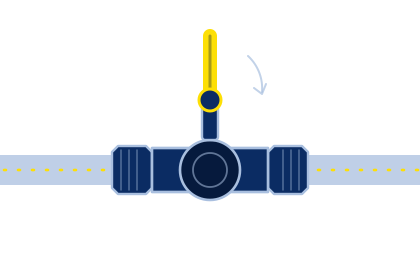
- Close the main gas valve in the gas cabinet or at the meter.
- Go outside and warn your household and neighbours.
- Call +385 98 393 647 from outside the area where you smell gas.
Why does gas smell?
Natural gas has no smell of its own. Where it enters our network we add an odorant, a substance with a distinctive and unpleasant smell, so that even the smallest leak is noticed immediately.
Emergency service 24/7
Our emergency team responds 365 days a year, including weekends and public holidays.
Call the emergency service immediately in the event of:
- a smell of gas indoors or outdoors,
- damage to a pipeline, service connection, gas cabinet or meter (e.g. during excavation),
- a fire or accident near gas installations,
- an unexpected interruption of gas supply.
When you call, tell us the address and describe the location, what you noticed (smell, hissing, damage), whether you closed the main valve and whether anyone is injured. In case of fire or injury, call 112 immediately.
Gas installation checks
Regular checks of the gas installation protect you and your neighbours. Please give our staff access to inspect the installation. If you find a note that we missed you, contact us to arrange a new appointment.
Leak-tightness and safety tests of installations in residential buildings are carried out under the Flammable Liquids and Gases Act. The cost of testing is covered by a supplement to the fixed monthly charge of €0.40 per metering point.
Beware of fraudsters. Our staff always carry an official ID card. If you are not sure who is at your door, call us on +385 49 226 426 to check.
Appliance maintenance
- Have your gas boiler, water heater and stove serviced by an authorised technician according to the manufacturer's instructions, ideally before the heating season.
- Work on the gas installation may only be carried out by an authorised contractor. Never repair it yourself.
- Report any change to the installation or appliances to the distribution system operator.
Chimneys and ventilation
The chimney is part of the gas installation and essential for appliances to work properly. Have it inspected regularly by a licensed chimney sweep, who issues a certificate after each inspection.
Most gas appliances use air from the room they are in for combustion. Ventilation openings must therefore always be open and unobstructed. Never cover them, and clean the dust off them from time to time.
After an earthquake, always have the chimney checked before using gas appliances again, as even minor damage can cause flue gases to flow back into the room.
Carbon monoxide (CO) is produced by incomplete combustion, has no colour or smell and is life-threatening. Signs of poisoning are headache, dizziness, nausea and drowsiness. If you notice them, air the room immediately, go outside and seek medical help (112). We recommend fitting a CO detector near gas appliances.
Energy efficiency
Advice on reducing gas consumption and heating costs.
Thermostat at 20-21 °C
Each degree lower room temperature cuts heating consumption by about 6 %.
Regular boiler service
A properly adjusted boiler uses less gas and runs more safely.
Short, thorough airing
A few minutes with the windows wide open is better than a window left ajar all the time.
Thermostatic valves
Fitted on radiators, they keep the desired temperature in each room.
Condensing boiler
It uses the heat in the flue gases and consumes noticeably less than old boilers.
A lid on the pot
The flame should not reach beyond the bottom of the pot, and a lid shortens cooking time.
Frequently asked questions
Enter only the black digits on the counter. They show consumption in whole cubic metres. The red digits after the decimal point are not needed. You can send the reading using the form.
Consumption is then estimated from your previous consumption and the difference is corrected after the next actual reading. Reporting regularly avoids later corrections on your bill.
The gas volume at normal conditions (Nm³) is multiplied by the gross calorific value (Hg) for the billing period. If Hg is 11.5 kWh/m³, 100 Nm³ equals 1,150 kWh. Monthly values are published on the Calorific value page.
Yes, and switching is free of charge. You submit the application to the new supplier on the form from the HROTE website, with the meter reading you took yourself. The procedure takes at most 15 working days and is described on the Switching supplier page.
Only authorised contractors. The list of authorised contractors and inspectors for our area is on the Partners page. Never repair the installation yourself.
Send a request to info@plin-konjscina.hr with your name, the address of the metering point and the email address for your bills.
At the post offices 49282 Konjščina and 49250 Zlatar. You can also pay by online or mobile banking using the details on the bill.
It depends on the type of building, the distance from the network and whether the documents are ready. For a building next to the existing network with documents in order, usually a few weeks. Details are on the Connection page.
When the property is handed over, the previous and the new owner read the meter together. Within 30 days the previous owner asks for the supply contract to be terminated and the new owner applies for a new contract, enclosing proof of the change of ownership. More on the Change of details page.
Put out any flame, do not touch switches or appliances, open the windows, close the main valve, go outside and call +385 98 393 647 from another location.
Did not find an answer? Send us a question or call the free info line 0800 200 198 (from Croatia).